Scientists Discover Water on Mars!

Mars is probably not the first planet you think of when it comes to water. However, if we rewind the clock to approximately 3 billion years ago, evidence from scientific explorations suggests that its surface was once covered with oceans, rivers, and lakes. Solar winds, continuous streams of electrons and protons from the sun’s outermost layer, slowly chipped away and depleted the Martian atmosphere. With the atmosphere disappearing, water either evaporated into space, merged with the surrounding minerals, or escaped underground and became ice.

Climate Change is causing a Rise in Dengue Fever!

Climate change is here, and along with warmer temperatures, mosquitoes are breeding faster and more often than they usually do. Normally, the worst a mosquito can do is give you an itchy bite. Some mosquitoes can, however, transmit deadly viruses that can lead to hospitalisation and even death. The most common mosquito-borne disease in the world is a fever called dengue, also named “break-bone fever”. Dengue fever is endemic (always present within a specific area) to many countries that lie within the tropical and sub-tropical belt.

Printed Solar Panels – Is This the Future?

The Commonwealth Scientific and Industrial Research Organisation (CSIRO) of Australia has been busy developing a new technology that allows ‘solar ink’ to be printed on plastic sheets to create thin, light, semi-transparent and flexible solar panels. Think solar panels integrated on tents for emergency or recreational purposes, panels laminated on home or office windows, panels lining the outside of greenhouses or tunnels, panels printed on clothing or even packaging – the possibilities are endless!

Can Cold Water Save the Great Barrier Reef?

For coral reefs, climate change continues to be a huge problem.  The warmer waters cause the coral to bleach – lose their colour by expelling the zooxanthellae algae living within their tissue. These colourful algae provide the corals with energy and nutrition via photosynthesis, in exchange for shelter. The Great Barrier Reef has incurred 7 mass bleaching events over the last 25 years, 5 in just the last 8 years! Curiously, some parts of the Great Barrier Reef, such as the northern Ribbon Reefs and the southern Swains and Pompey reefs, have escaped these mass bleaching events and lie untouched – how are these reefs still alive and thriving?

Category 1 Combo Cyclone Affects Ocean Like A 4 Or 5

On April 6th, 2021, a rare event began to unfold, the interaction and merging of two tropical cyclones (TCs) in the Indian Ocean off the northwest tip of Australia. TCs Odette and Seroja combined fully on April 9th. The remaining Seroja abruptly changed direction by roughly 90° on the 10th and headed towards the Western Australian coast.

Early Bronze Age Alphabet Discovered

Archaeologists unearthed possible alphabetic writings significantly older than any others ever found. Archaeologists discovered this in 2004 at the ancient city of Umm el-Marra, in the northwest of present-day Syria.

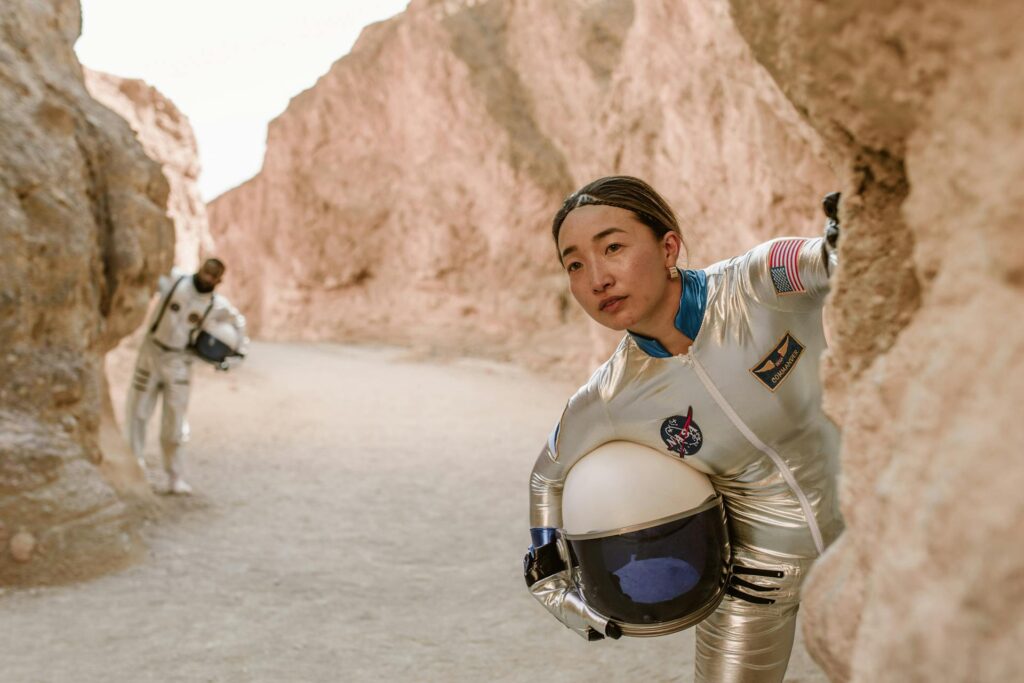
Humans Shouldn’t Migrate to Mars Yet

With new technology and scientific breakthroughs left, right, and centre, Mars could be the second home of humanity. The possibility of living on the red planet sounds exciting, but stop and think: is it a good idea?

Gophers and Fungi Revive Mt St Helens After Explosion

40 years ago, scientists plopped two gophers into fenced areas at Mt St Helens to see if they could help the environment recover after a devastating volcanic explosion. The effects of the experiment decades later were far beyond the scientists’ expectations.

Scientists Discover Spiderman-Like Fluid

Have you ever wondered if you could swing from building to building like Spiderman? Well, perhaps someday you will be able to do this! Around October 2024, scientists at the University of the United States found a way to create a Spiderman-based web-like fluid. The building blocks of this were the cocoons of the Bombyx mori silkworm, which is then boiled down which  into a special solution to break down and extract the main component – a fibrous protein called silk fibroin. The acetone caused the silk fibroin to form a semi-solid hydrogel over hours. But if this web-like material is going to be useful, it must form much quicker.

Chemicals Are Threatening Our Wildlife

Imagine a world without animals—no butterflies fluttering through the air, no cicadas singing in the summer, no birds soaring overhead. While this is far from our reality today, we are at risk of losing some of our beloved species, such as freshwater sea turtles. A recent joint study by the Commonwealth Scientific and Industrial Research Organisation (CSIRO) and the Queensland Department of the Environment, Tourism, Science and Innovation (DETSI) has revealed alarming signs of population decline and the toxic impact of PFAS chemicals on Queensland’s freshwater turtles, potentially pushing their populations toward collapse.